Jersey Supply Chain AI
Real-Time AI Risk Intelligence for a Nation's Supply Chain
View Live Project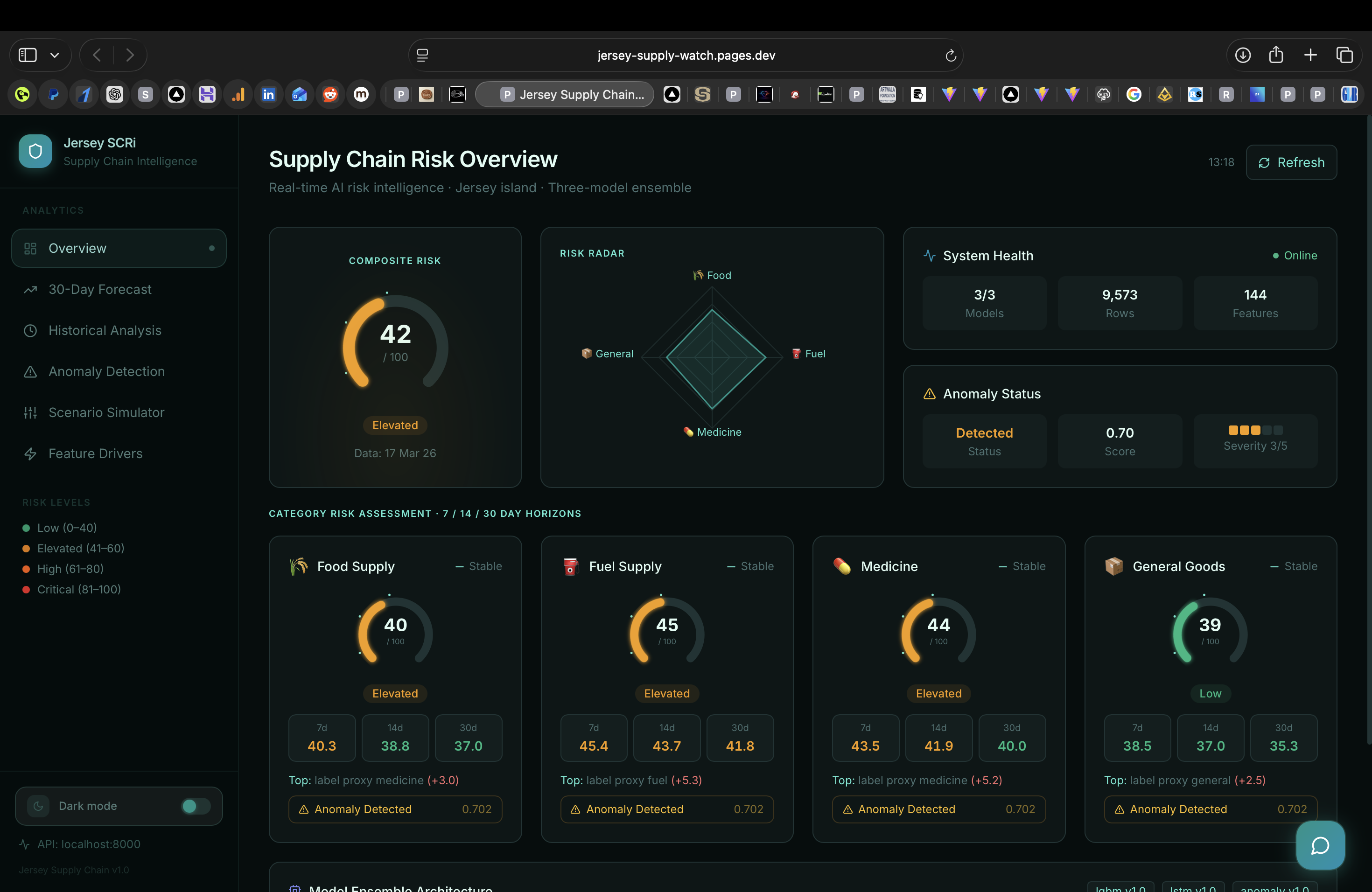
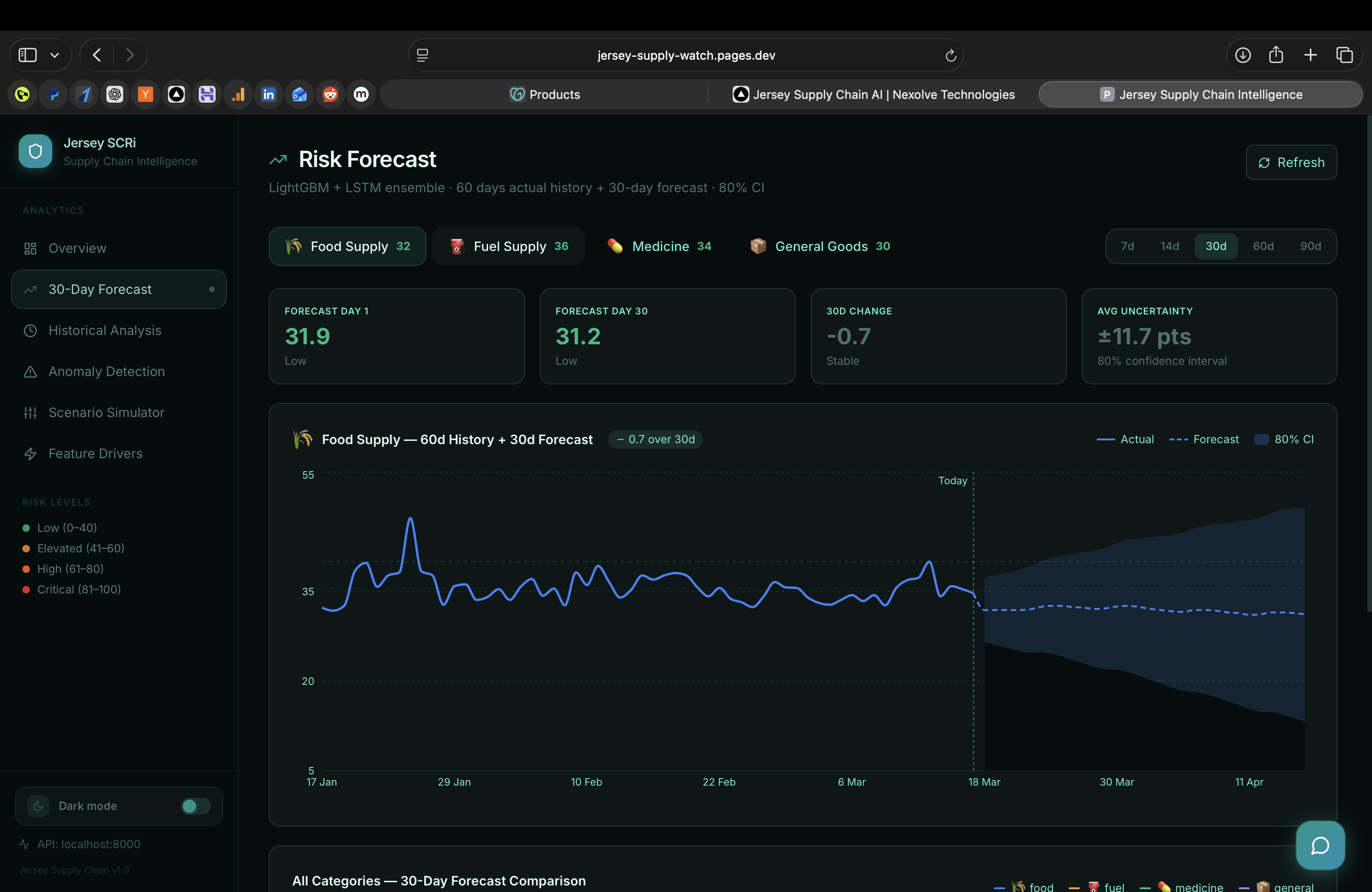
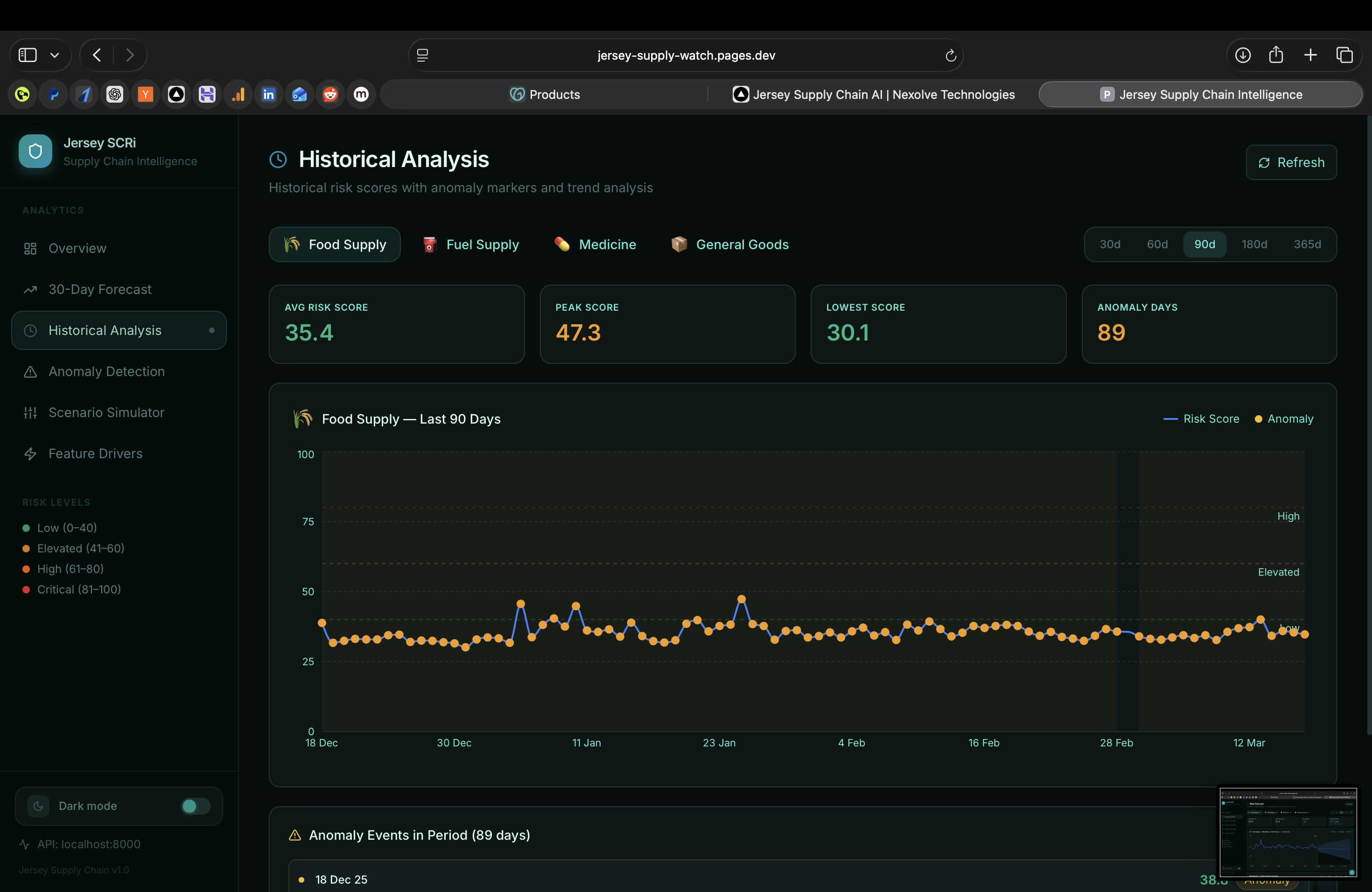
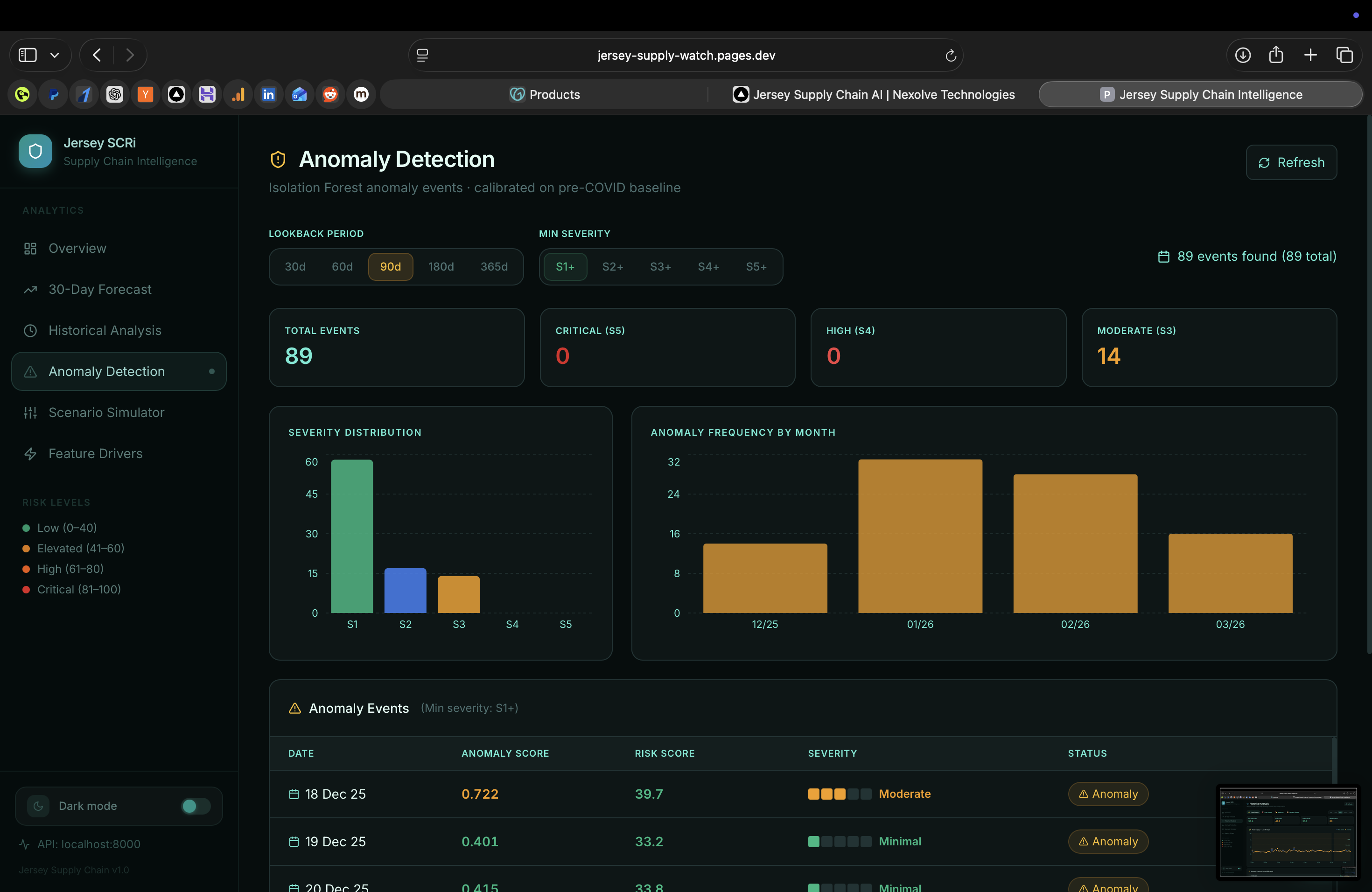
 1 / 5
1 / 53-model ensemble
Model Architecture
9,573
Training Rows
30 days
Forecast Horizon
About the Project
Jersey Supply Chain AI (Jersey SCRi) is a decision-support dashboard built for Jersey Island's supply chain governance, a small island economy with acute exposure to food, fuel, medicine, and general goods import disruption. The Next.js TypeScript frontend is styled with Shadcn UI and Tailwind CSS, served via Cloudflare; a FastAPI Python backend exposes the inference API backed by PKL-serialised trained models hosted on HuggingFace. A three-model ensemble (LSTM for temporal patterns, XGBoost for feature importance, anomaly isolation forest for outlier detection) trained on 9,573 rows of supply chain history surfaces a live composite risk score with 7-, 14-, and 30-day forecast horizons.
How It Works
- 1
The Next.js TypeScript frontend queries the FastAPI inference endpoint for live risk scores and forecast data; Cloudflare caches non-real-time responses at the edge and provides DDoS protection for the public-facing dashboard.
- 2
The FastAPI backend loads PKL-serialised LSTM, XGBoost, and isolation forest models from HuggingFace model repositories on startup, serving low-latency inference via a REST API without per-request model loading overhead.
- 3
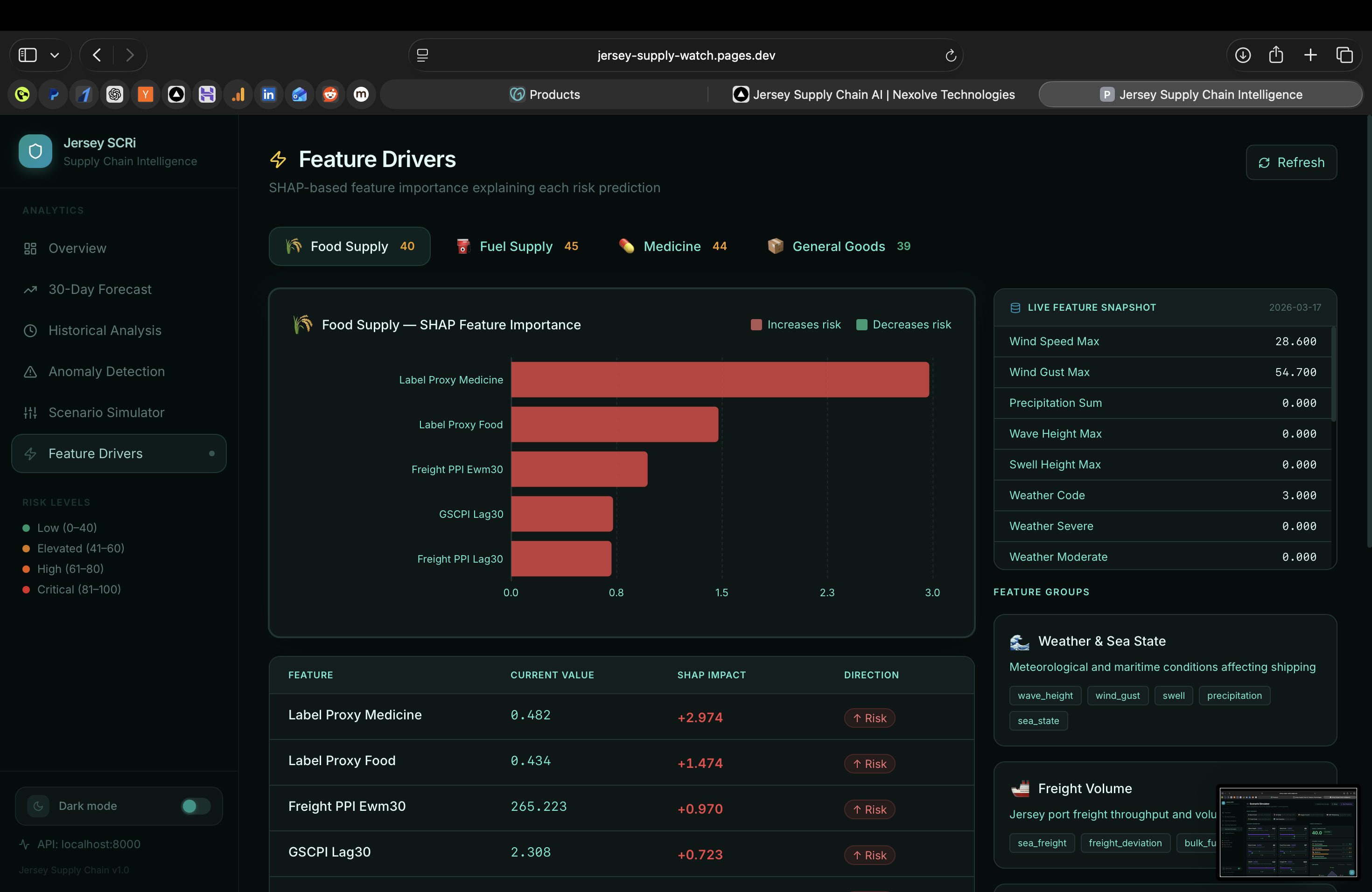
The LSTM sequence model captures temporal dependencies and seasonal cycles in import volumes; XGBoost provides interpretable feature importance rankings per supply category (Food, Fuel, Medicine, General Goods).
- 4
The isolation forest anomaly network flags statistical outliers, triggering an Anomaly Detected badge with a severity score (1–5) when readings deviate significantly from the rolling historical baseline.
- 5
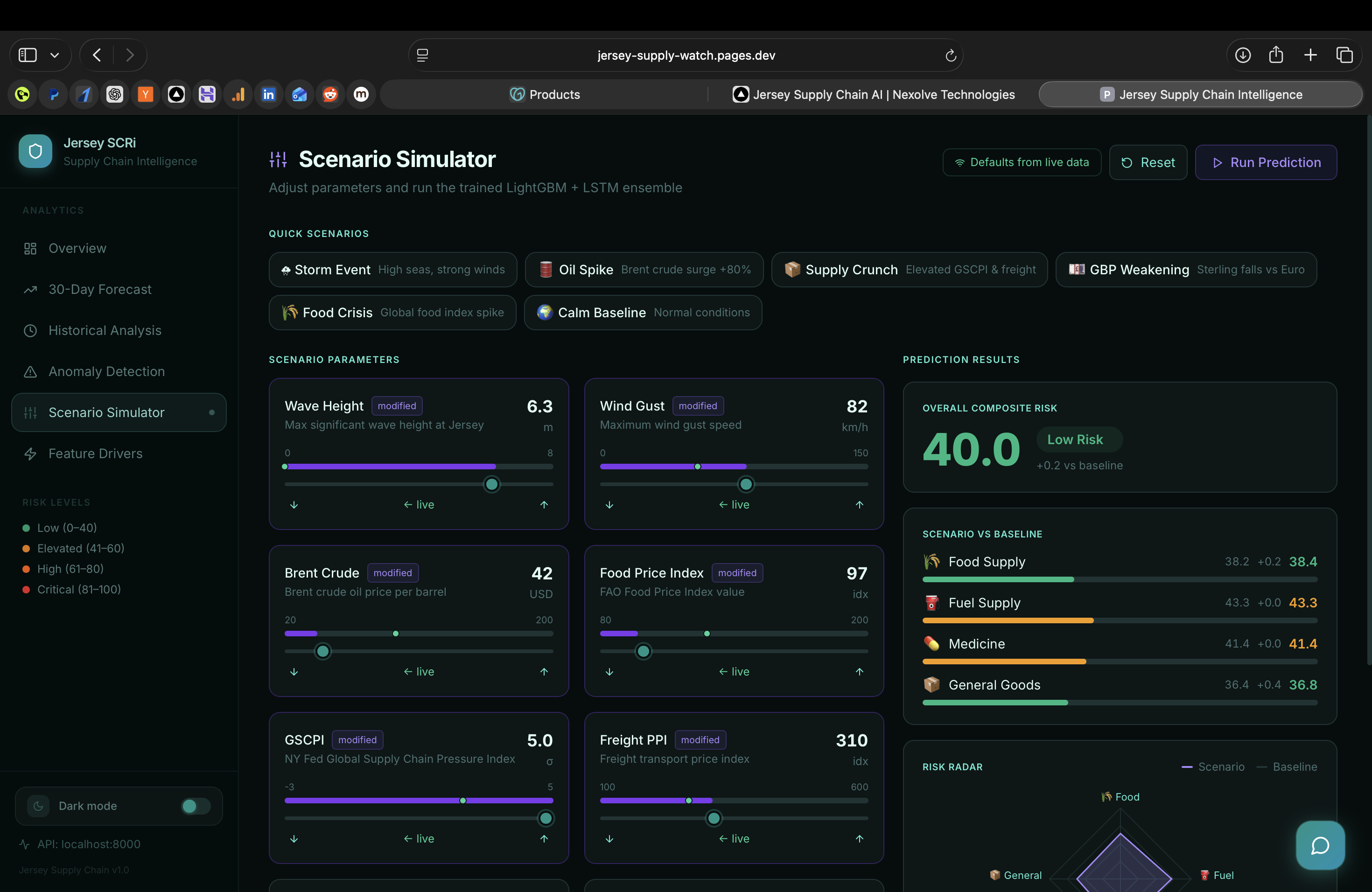
The Scenario Simulator lets analysts stress-test hypotheticals (e.g., 'what if fuel imports drop 30% for 2 weeks?') by injecting perturbations into the FastAPI model endpoints and re-running the 30-day forecast in real time.
Tech Stack
Want to build something like this?
We'd love to hear about your project. Let's talk about what you're building.