


Build Your MVP Right
Build Your MVP Right: A Live Product, Without Overbuilding.
The smallest thing you can put in front of real users that still answers the question you're asking. Not a demo, not a deck, and not version one of everything.
What you get
- A deployed product real users can actually use
- The instrumentation to read what happened after launch
- Source, infrastructure and documentation you own
- A codebase that can become v2 — not one that has to be thrown away first
What it is
What This Service Means
An MVP is the smallest thing you can put in front of real users that still answers the question you're actually asking. Not a demo, not a deck, and not version one of everything you eventually want.
The point is evidence. You end up knowing something you only believed before.
What it isn't
What An MVP Is Not
These get used interchangeably and then scoped as if they were the same thing, which is where budgets go (the full comparison):
- A prototype — proves a design idea, throwaway, no real data behind it
- A proof of concept — proves a technical risk is survivable, never meant for users
- A pilot — a finished product given to a small group, which is a later problem
- A waitlist page — measures interest, not whether the thing works
How it gets done
How We Scope One
- 01Name the assumption that sinks the business if it's wrong — everything else is decoration
- 02Cut what doesn't test it, which is usually most of the first feature list (the mistakes we see repeatedly)
- 03Keep what has to be real — real auth, real data, and real payments if money is part of the question
- 04Instrument it before launch, so the result is evidence rather than a debate about vibes
- 05Fix the scope in writing before any code, including what is deliberately not in it
- 06Talk about cost openly — what drives it up, and what doesn't (cost breakdown)
Who it's for
Who This Is For
- Founders with one assumption worth spending real money to test
- Operators inside a company validating a new line without committing a full team to it
- Anyone quoted six months for something that should take weeks
- Technical founders who could build it but would rather spend the time on customers
What you get
What You Get
- A deployed product real users can actually use
- The instrumentation to read what happened after launch
- Source, infrastructure and documentation you own
- A codebase that can become v2 — not one that has to be thrown away first
- An honest read on what the results mean, including when they say stop
See it built
Watch The Work, Start To Finish.
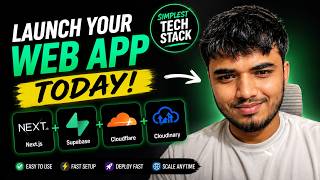 Build & Deploy a Full Stack Web App with AI (The Simplest Tech Stack)A walkthrough of this kind of work, on the channel.
$8k covers the whole project: scope, build, deploy. If a lump sum is awkward, the same work is $1.5k a month across six months. There's no long-tail retainer attached. You're buying a finished project, not a seat.
It starts with scope, not code. We map the problem, the constraints and what 'done' means, then agree it in writing before anything is built. From there we deliver in milestones with updates on a schedule, so you always know what's being worked on and what's next.
Senior engineers. There's no handoff to juniors after the pitch, and we document trade-offs as we go, so you inherit the reasoning behind the system, not just the system.
We take on a small number of engagements at a time so the senior team stays on the work. A 20-minute call is the fastest way to find out current availability, and whether we're the right fit at all.
Further reading
Straight Answers For This Kind Of Project.



Book a call
Tell Us The Idea You Need To Test.
A 20-minute call. We'll listen to the problem, tell you honestly whether we're the right team for it, and outline what the build would look like.
- 01Tell us the problemA 20-minute call. Rough is fine.
- 02Get a scoped planWhat we'd build and what it takes, within 48 hours.
- 03Start on your timelineOnce the scope is signed off, we build in milestones.